Home / Journal / How are food and mood connected?
How are food and mood connected?
Through your gut, inflammation and the nutrients your brain uses. What the research shows, and what it doesn't yet.
Kylie Gillin, Bachelor of Health Science in Food and Nutrition · 28 November 2026 · 6 min read
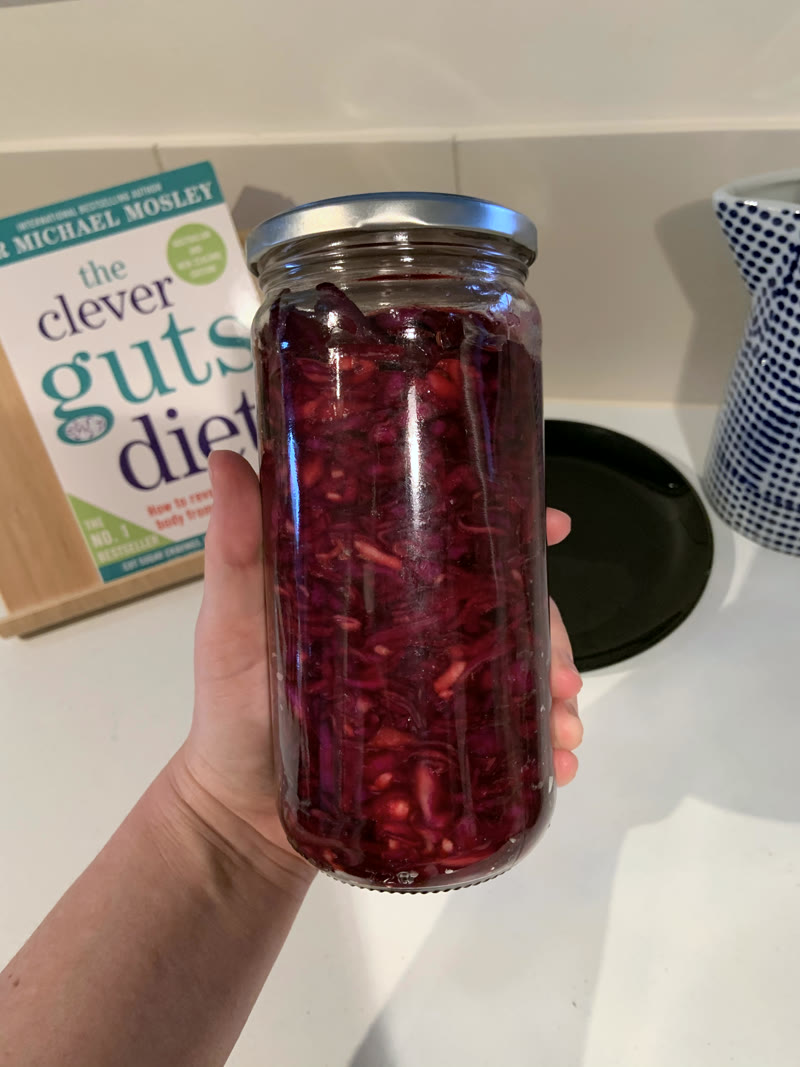
Food and mood seem to connect through several routes at once. Your gut bacteria, inflammation, the nutrients your brain uses and your everyday pattern of eating all appear to play a part, and none of them works alone. Research suggests the overall way you eat matters more than any single food.
This post draws on research into diet, the gut and mental health, checked against the original studies and Australian health guidance on 28 November 2026. The sources are at the end.
While I was studying food and nutrition, a friend was going through a hard time with her mood. I'd just read Dr Michael Mosley's Clever Guts, with its recipes for the gut microbiome, and suggested she try it. It wasn't an easy plan to follow, but she stuck with it, and I was stunned by the difference she felt.
Low mood and depression take many forms, and one person's experience isn't proof of anything. But it was eye-opening. It showed me how closely what we eat and how we feel might be connected.
How are food and mood connected?
Food and mood seem to connect through more than one route. The bacteria in your gut, the level of inflammation in your body and the nutrients your brain relies on all appear to be involved, and they affect each other. That's why the research points to your overall way of eating rather than one ingredient.
Later, I came across Professor Felice Jacka's work at the Food & Mood Centre, Deakin University, and it changed the way I understood everything I had learnt.
Your gut is part of the picture. People with depression often have fewer of the gut bacteria that help keep inflammation down, although nobody yet knows which comes first. I've written more about the gut brain connection in Does stress cause bloating?
You may have read that most of your serotonin is made in your gut, so a healthier gut sends your brain more of its “happy chemical”. Most of it is made in the gut, but it can't readily cross into the brain, so that idea goes further than the research does.
Can what you eat affect depression?
Research suggests it may play a part. People whose eating follows a healthier overall pattern tend to have a lower risk of depression, and trials that helped people improve how they eat have been linked with fewer symptoms of depression, although the effect was small.
In a small Australian trial, adults with depression who had support from a dietitian to improve their eating saw more improvement in their symptoms than those who had social support instead. It was small, people knew which group they were in, and most were already having treatment, so it's promising rather than settled.
The pattern studied most is Mediterranean-style eating, with plenty of vegetables, fruit, legumes, whole grains, fish, nuts and olive oil. At the other end, eating a lot of ultra-processed food has been linked with a higher risk of depression. Those studies can't show which comes first, and how much you eat seems to matter more than whether you ever do.
International guidelines for depression now include diet as part of care, with less evidence behind it than exercise or sleep. None of this replaces support or treatment that's helping you. If low mood is getting on top of you, Beyond Blue (1300 22 4636) and Lifeline (13 11 14) are there to talk to.
Which foods are linked with better mood?
No single food improves mood on its own, and Australian health guidance says the same: a varied diet matters more than any one food. Some foods do keep coming up in the research, mostly in studies that can show a link rather than prove one.
| Food | What research has found | How strong |
|---|---|---|
| Vegetables and fruit | In Australian data, people who ate more reported rising happiness and wellbeing within two years | A link, from following people over time |
| Colourful plants, especially citrus | Women who ate more of certain plant compounds had a slightly lower risk of depression over ten years | A link, from a large study of women |
| Fibre, from plants and whole grains | People who ate more tended to report fewer symptoms of depression and anxiety | A link from food. Fibre supplements didn't show a benefit |
| Oily fish | People who ate the most fish had a lower risk of depression | A link, from pooled observational studies |
| Cocoa | Cocoa-rich foods and drinks lifted mood for a short while | Short-term, from small trials |
It's a picture of what's been studied, not a list to eat your way through.
Does your mood change what you eat?
Yes, it works in both directions. When you're stressed, tired or low, what you reach for can change, and a depleted week can make cooking feel like one thing too many. Hunger can change your mood as well.
In one study, people felt angrier, more irritable and less content when they were hungrier, so “hangry” seems to be real. A meal that comes too late in a long day can colour how the rest of it feels.
Why does adding food matter more than cutting it out?
In research on Australian women, eating too little nutrient-rich food and eating too much processed food were each linked with poorer mental health on their own. So adding more of the first may count by itself, before you change anything else.
Food guilt doesn't seem to help either. In one study, people who felt guilty about a treat like chocolate cake gained no extra motivation to eat well from that guilt. Enjoying food is part of how it supports you. I've written more about this in Why is eating healthy so complicated?
How do you eat for mood in an ordinary week?
Think about the pattern rather than perfection. A balanced plate is a simple picture to come back to, with half vegetables, a quarter protein, a quarter whole grains, then a little healthy fat and something for flavour. It's a picture of a meal, not something to measure.
That's also what I took from my friend's experience. The thinking behind her plan was good, but it was the kind of eating people easily fall off. My Food and Mood recipe book takes the same ideas and fits them into an ordinary week, with a short note on each recipe about how food and mood connect. They're the same recipes as my program Small Shifts: Three Weeks.
If you've noticed that food and mood seem to move together for you, you're not imagining it. The research is still growing, and it already points somewhere hopeful. The everyday food on your plate, eaten in a way you can keep up, may be one of the ways you start to feel more like yourself.
Every fortnight I write Small Shifts, Big Impact, an email with three small, evidence-based habits that fit around a full week, and the first one is always about food. You pick one to try.
Free, every second Friday. Unsubscribe anytime. Privacy policy
Questions women ask
Can food affect your mood?
Research suggests it can. Your overall way of eating has been linked with mood and with the risk of depression, through your gut, inflammation and the nutrients your brain uses.
Is the Mediterranean diet good for mood?
It's the pattern studied most, and it's linked with a lower risk of depression. Trials are promising but mixed, so it's best seen as a good pattern to lean towards rather than a treatment.
Does chocolate lift your mood?
In small trials, cocoa-rich foods and drinks lifted mood for a short while. It's a nice part of eating well, not a fix.

Kylie Gillin
Nutritionist, lifestyle medicine coach and mind-body facilitator
Bachelor of Health Science in Food and Nutrition, and more than 600 hours of training across yoga, polyvagal theory, the nervous system, embodiment and trauma-sensitive practice. More about me
Last reviewed 28 November 2026
Sources
- Mosley M. The Clever Guts Diet: How to revolutionise your body from the inside out.
- Nikolova VL, Smith MRB, Hall LJ, Cleare AJ, Stone JM, Young AH. Perturbations in gut microbiota composition in psychiatric disorders: a review and meta-analysis. JAMA Psychiatry. 2021;78(12):1343-1354. doi
- Jones LA, Sun EW, Martin AM, Keating DJ. The ever-changing roles of serotonin. Int J Biochem Cell Biol. 2020;125:105776. doi
- Lassale C, Batty GD, Baghdadli A, et al. Healthy dietary indices and risk of depressive outcomes: a systematic review and meta-analysis of observational studies. Mol Psychiatry. 2019;24(7):965-986. doi
- Firth J, Marx W, Dash S, et al. The effects of dietary improvement on symptoms of depression and anxiety: a meta-analysis of randomized controlled trials. Psychosom Med. 2019;81(3):265-280. doi
- Jacka FN, O'Neil A, Opie R, et al. A randomised controlled trial of dietary improvement for adults with major depression (the 'SMILES' trial). BMC Med. 2017;15(1):23. doi
- Lane MM, Gamage E, Du S, et al. Ultra-processed food exposure and adverse health outcomes: umbrella review of epidemiological meta-analyses. BMJ. 2024;384:e077310. doi
- Marx W, Manger SH, Blencowe M, et al. Clinical guidelines for the use of lifestyle-based mental health care in major depressive disorder: WFSBP and ASLM taskforce. World J Biol Psychiatry. 2023;24(5):333-386. doi
- Better Health Channel (Victorian Government). Food and your mood. betterhealth.vic.gov.au
- Mujcic R, Oswald AJ. Evolution of well-being and happiness after increases in consumption of fruit and vegetables. Am J Public Health. 2016;106(8):1504-1510. doi
- Chang SC, Cassidy A, Willett WC, et al. Dietary flavonoid intake and risk of incident depression in midlife and older women. Am J Clin Nutr. 2016;104(3):704-714. doi
- Aslam H, Lotfaliany M, So D, et al. Fiber intake and fiber intervention in depression and anxiety: a systematic review and meta-analysis of observational studies and randomized controlled trials. Nutr Rev. 2024;82(12):1678-1695. doi
- Li F, Liu X, Zhang D. Fish consumption and risk of depression: a meta-analysis. J Epidemiol Community Health. 2016;70(3):299-304. doi
- Fusar-Poli L, Gabbiadini A, Ciancio A, et al. The effect of cocoa-rich products on depression, anxiety, and mood: a systematic review and meta-analysis. Crit Rev Food Sci Nutr. 2022;62(28):7905-7916. doi
- Swami V, Hochstöger S, Kargl E, Stieger S. Hangry in the field: an experience sampling study on the impact of hunger on anger, irritability, and affect. PLoS One. 2022;17(7):e0269629. doi
- Jacka FN, Pasco JA, Mykletun A, et al. Association of Western and traditional diets with depression and anxiety in women. Am J Psychiatry. 2010;167(3):305-311. doi
- Kuijer RG, Boyce JA. Chocolate cake. Guilt or celebration? Associations with healthy eating attitudes, perceived behavioural control, intentions and weight-loss. Appetite. 2014;74:48-54. doi
- National Health and Medical Research Council. Australian Guide to Healthy Eating. eatforhealth.gov.au
Small Shifts, Big Impact
Free, every second Friday. Unsubscribe anytime. Privacy policy
 Food and nutrition
 Food and nutrition
 Lifestyle