Home / Journal / Always tired even when I sleep well
Why am I always tired even when I sleep well?
Stress can keep your body on alert, so sleep may not restore you. What's happening, and what may help.
Kylie Gillin, Bachelor of Health Science in Food and Nutrition · 28 November 2026 · 6 min read
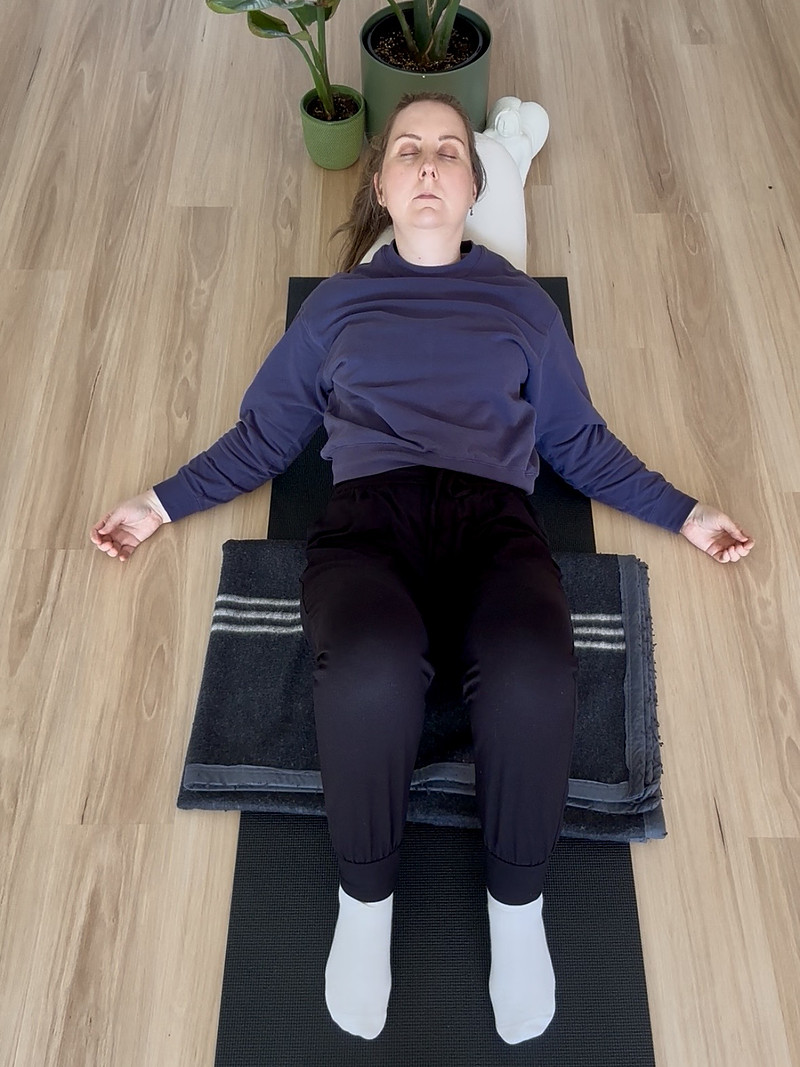
If you're always tired even when you sleep well, the hours may not be the whole story. When stress keeps your body on alert, sleep can become lighter and more broken, so a full night in bed may not restore you the way it should. You can sleep for hours and still wake up as tired as when you went to bed.
This post draws on research into stress, sleep and recovery from work, checked against the original studies on 28 November 2026. The sources are at the end.
I finished six years of part-time study, all of it fitted around a full-time job, and without a break I started building my own wellbeing studio from scratch. Within that first year I was teaching ten yoga classes a week, employing yoga teachers, and handling the bookings, the bills, the cleaning and the marketing myself, with the full-time job still on top. However much I put in, the studio wasn't growing the way I needed it to, so I kept pushing harder. Looking back, I was in full survival mode.
Then I became eligible for long service leave, and I saw it as the chance to finally give the studio my full attention. Instead, as soon as I slowed down, I could barely get out of bed. I slept for hours on end and woke up just as tired. Getting through the bare minimum took everything I had, and no amount of sleep seemed to touch it.
Why am I always tired even when I sleep well?
Sleep doesn't always restore you when your body is still on alert. Stress has been linked with shorter, more broken sleep, and possibly less of the deepest sleep. So the hours can look fine while the sleep itself does less of its work, and you wake up still tired.
Australian health guidance lists stress and poor-quality sleep among the most common reasons for ongoing tiredness, and worry is closely linked with broken sleep.
Going over things in your head has been linked with a raised heart rate and stress hormones that stay up after the stressful moment has passed, and worry about what's coming seems to count too. Your nervous system is built to rise to meet a demand and come back down once it's over. When the demands never let up, it gets little chance to come back down, even overnight.
Some people's sleep is also more easily unsettled by stress than others', and research suggests women are more often in that group. I've written more about how stress builds up in What is your body budget?
What's the difference between tired and sleepy?
Sleepy is your body asking for sleep. Tired, in the sense of having no energy, is a different thing, and the two often get lumped together. That's why extra sleep can leave you feeling no better. If what you feel is flat rather than drowsy, more hours in bed may not be what shifts it.
Why do I crash when I finally slow down?
Some people find the tiredness hits hardest when the pressure lifts, on the first weekend of leave or the first days of a holiday. The research on this is still early, but the people who describe it tend to carry heavy workloads and find it hard to switch off.
That was me on long service leave. For that whole first year I'd been running on survival mode, and once the demands eased, the tiredness I'd been pushing through caught up with me.
Tiredness can have many causes, and this post can't tell you which one is yours. If tiredness or low mood is getting on top of you, Beyond Blue (1300 22 4636) and Lifeline (13 11 14) are there to talk to.
What does "tired and wired" mean?
Tired and wired is being exhausted and unable to switch off at the same time. You're too tired to do anything, yet your mind won't settle when you lie down. Many women describe falling into bed and then lying awake going over a conversation, a deadline or tomorrow's list.
Being tired and being switched on can happen together. Your body wants rest, and your nervous system hasn't yet had the signal that it's safe to come back down.
Why am I still tired after resting all weekend?
Resting stops your body. Recovering needs your mind to step away too. If you spend the weekend going over work, your nervous system can stay partly switched on, so a Saturday on the couch may not feel like rest at all.
Friday night you're on the couch by eight, too tired to choose something to watch. Saturday goes to sleep, and Sunday goes to the washing, the food shop and a low hum of dread about the week ahead. By Monday morning you feel the way you did on Friday.
Not all thinking about work is tiring. Replaying what went wrong, or what might, has been linked with more tiredness and poorer sleep. Thinking a problem through to a plan and then putting it down doesn't seem to carry the same cost.
What may help your body come back down?
Switching off from work in your head seems to matter more than the hours you spend lying down. In research on holidays, mentally stepping away from work and moving your body were linked with the biggest lift in wellbeing.
| Resting | Recovering | |
|---|---|---|
| What your body does | Stops moving | Comes back down after the demand has passed |
| Where your mind is | Can still be at work | Has stepped away from it |
| What it can look like | A Saturday on the couch, scrolling work messages | A walk, time with people, something that takes your mind elsewhere |
| How it builds | Hours of it may not land | Can be practised, a little at a time |
Switching off also seems to be something you can practise. Studies that set out to help people detach from work found small to moderate improvements, which is hopeful if you've always thought of yourself as someone who can't switch off.
My program Small Shifts: Three Weeks is built around small moments like these, with yoga, breathing practices, one small habit a week and the same recipes as my Food and Mood recipe book.
Waking up tired after a full night can make you wonder what's wrong with you. Often it's a sign your body has been holding on for a long time. When your nervous system starts to get a clear signal that the day is done, sleep can begin to do more of its work again, a little at a time.
Every fortnight I write Small Shifts, Big Impact, an email with three small, evidence-based habits that fit around a full week, and you pick one to try. If your sleep isn't topping you up, it's a gentle place to begin.
Free, every second Friday. Unsubscribe anytime. Privacy policy
Questions women ask
Why do I wake up tired after 8 hours of sleep?
Eight hours in bed doesn't always mean eight hours of deep, unbroken sleep. Stress has been linked with lighter, more broken sleep, so you can wake up tired even when the hours look right.
Does a holiday help?
It can. A recent review of holiday research found that time off was linked with a clear lift in wellbeing that lasted longer than earlier research suggested. Switching off from work and being physically active were linked with the biggest benefit.
Why do I feel worse on Sunday night?
Worry about a demanding week has been linked with the same lingering stress response as replaying a hard day, so your nervous system can start the working week before Monday does.

Kylie Gillin
Nutritionist, lifestyle medicine coach and mind-body facilitator
Bachelor of Health Science in Food and Nutrition, and more than 600 hours of training across yoga, polyvagal theory, the nervous system, embodiment and trauma-sensitive practice. More about me
Last reviewed 28 November 2026
Sources
- Åkerstedt T. Psychosocial stress and impaired sleep. Scand J Work Environ Health. 2006;32(6):493-501. PubMed
- Brosschot JF, Gerin W, Thayer JF. The perseverative cognition hypothesis: a review of worry, prolonged stress-related physiological activation, and health. J Psychosom Res. 2006;60(2):113-124. doi
- Kalmbach DA, Anderson JR, Drake CL. The impact of stress on sleep: pathogenic sleep reactivity as a vulnerability to insomnia and circadian disorders. J Sleep Res. 2018;27(6):e12710. doi
- Shen J, Barbera J, Shapiro CM. Distinguishing sleepiness and fatigue: focus on definition and measurement. Sleep Med Rev. 2006;10(1):63-76. doi
- Vingerhoets AJ, Van Huijgevoort M, Van Heck GL. Leisure sickness: a pilot study on its prevalence, phenomenology, and background. Psychother Psychosom. 2002;71(6):311-317. doi
- Querstret D, Cropley M. Exploring the relationship between work-related rumination, sleep quality, and work-related fatigue. J Occup Health Psychol. 2012;17(3):341-353. doi
- Grant RS, Buchanan BE, Shockley KM. I need a vacation: a meta-analysis of vacation and employee well-being. J Appl Psychol. 2025;110(7):887-905. doi
- Karabinski T, Haun VC, Nübold A, Wendsche J, Wegge J. Interventions for improving psychological detachment from work: a meta-analysis. J Occup Health Psychol. 2021;26(3):224-242. doi
- Healthdirect Australia. Fatigue. healthdirect.gov.au
- Better Health Channel (Victorian Government). Fatigue. betterhealth.vic.gov.au
- Sleep Health Foundation. Anxiety and sleep. sleephealthfoundation.org.au
Small Shifts, Big Impact
Free, every second Friday. Unsubscribe anytime. Privacy policy
 Nervous system
 Nervous system
 Nervous system