For the strongand capable onewho's been runningon autopilot.
Small, everyday changes to how you eat, move and sleep, for when you're tired all the time but find it hard to switch off.
Free, fortnightly. Unsubscribe anytime. Privacy policy
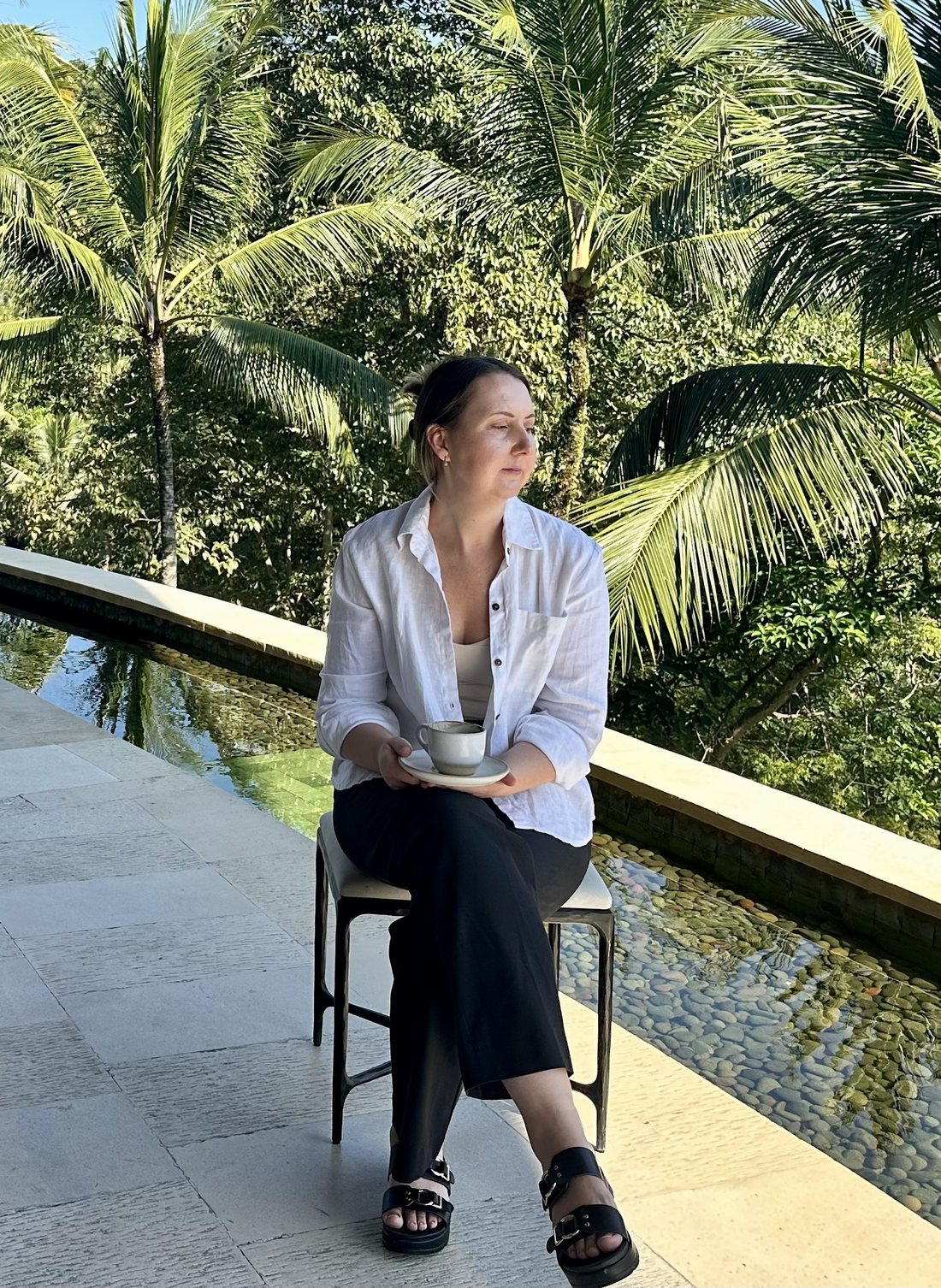
Always tired, even with enough sleep?
You're good at getting things done, and you've got good at pushing past what your body is telling you.
Coping on the outside
Everyone sees the one who has it together. Underneath, you're tired but wired, and nobody thinks to ask.
Exhausted all the time
Even after 8 hours' sleep, a quiet weekend or a week away, you still wake up tired.
Can't switch off from work
Work and the to-do list follow you into the evening, and by Sunday night your head is already in Monday.
This is often your nervous system doing what it does under sustained pressure, carrying your day for years without the signal that it's safe to come back down.
Small shifts in how you eat, move and switch off, one at a time.
I believe that deep down, you already know what's best for you. The hard part is tuning in to what your body needs when work, family and a full calendar are all asking for your attention.
Each shift is small enough to start the day you read it, without changing your whole routine first. Starting straight away gives you the chance to notice something early.
Pick one small shift
Food, movement, sleep or switching off. Just one.
Try it this week
Something you might notice early.
Keep what's yours
Small changes ripple out. Keep the habits that help.
Self-paced programs and recipes for energy and mood.
Each one is something you can try this week.
 $15
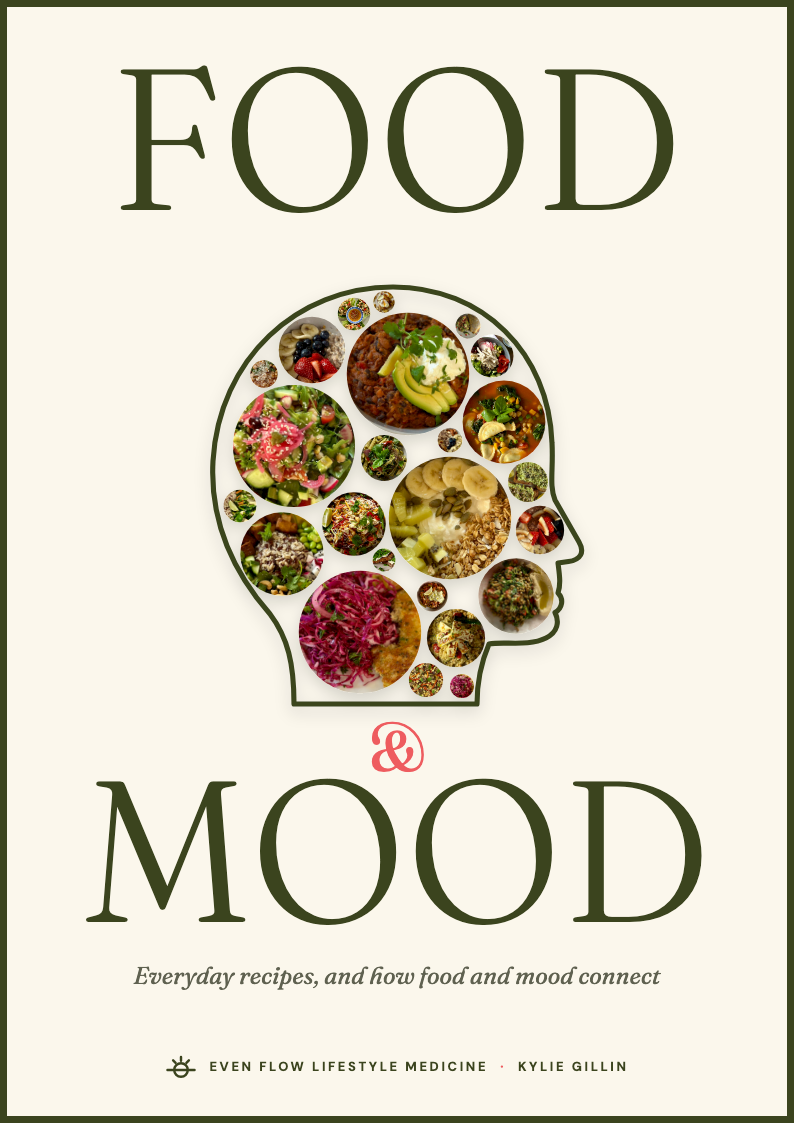
Food and Mood Recipes
Everyday meals from a food and mood angle, for when you only want the recipes. Each one comes with a short note on how food and mood connect.
Same recipes as Small Shifts: Three Weeks
See the book →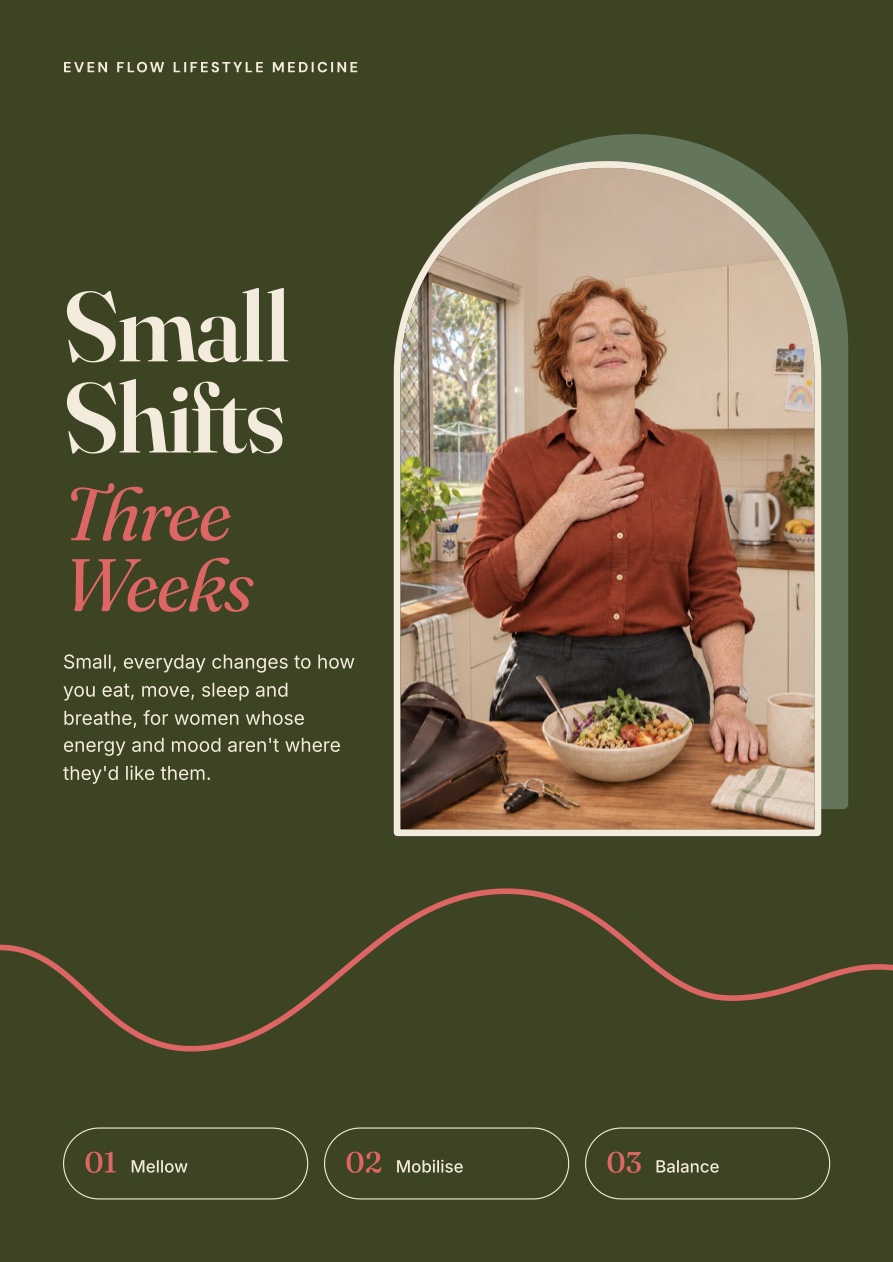 $29
Small Shifts: Three Weeks
Three weeks of small, doable changes for your energy and mood. Yoga that works with your nervous system, short practices for your desk or the car, the recipes, and one habit at a time.
Includes all the recipes
See the program →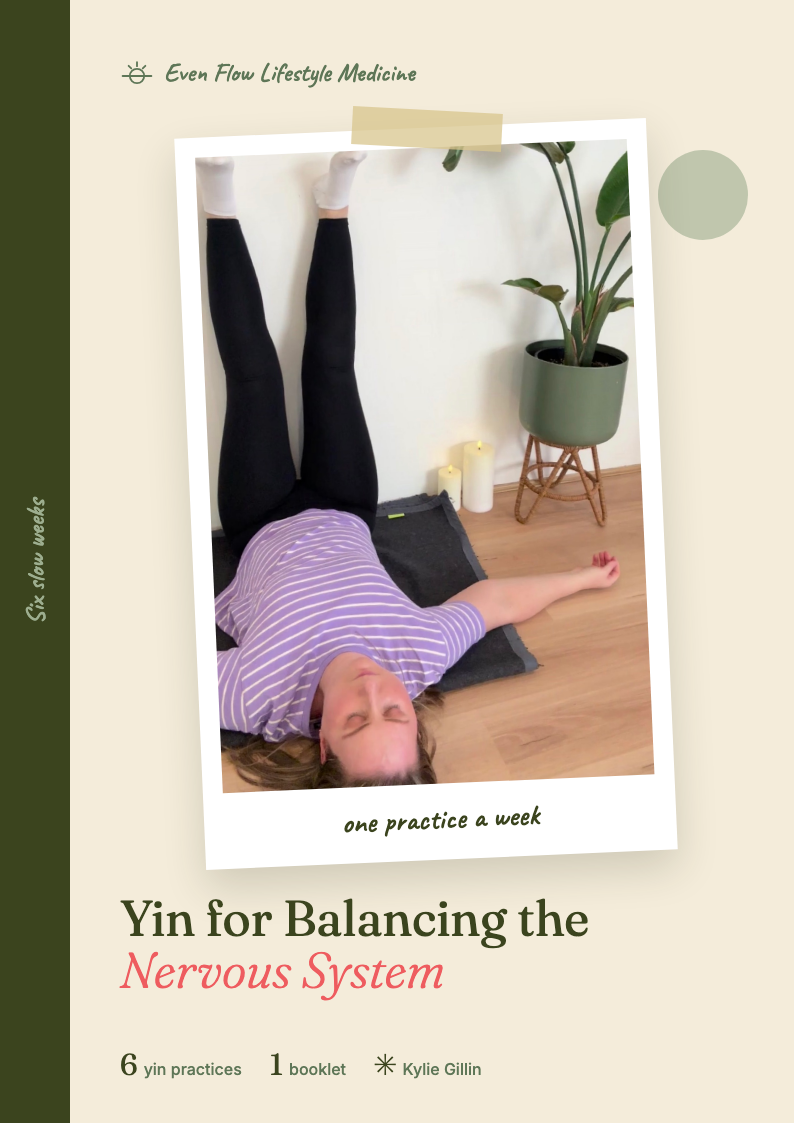 $45
Yin for Balancing the Nervous System
Slow, floor-based yoga that works with your nervous system, for the evenings you're wired and can't switch off. Six weeks of practice that may help you come back towards steady.
Coming soonRecipes and yin together
The Frankie dashboard, for you or your team.
One page for your day, built around how you think, with a small companion who checks in. You pick up a practical AI skill along the way.
Frankie is a one-page view of your morning that you set up with an AI assistant, so the day starts with what matters to you. It supports your day, and it doesn't replace people, rest or care. Read how I use it →
Tap one to see its dashboard
Small groups
- Live online, in a small group
- Build your own by pasting in steps I give you
- Leave with it working, and the know-how to keep shaping it
Workplaces
- Your people start the day knowing what matters
- Time protected to focus, without running themselves into the ground
- Each person chooses what goes on theirs
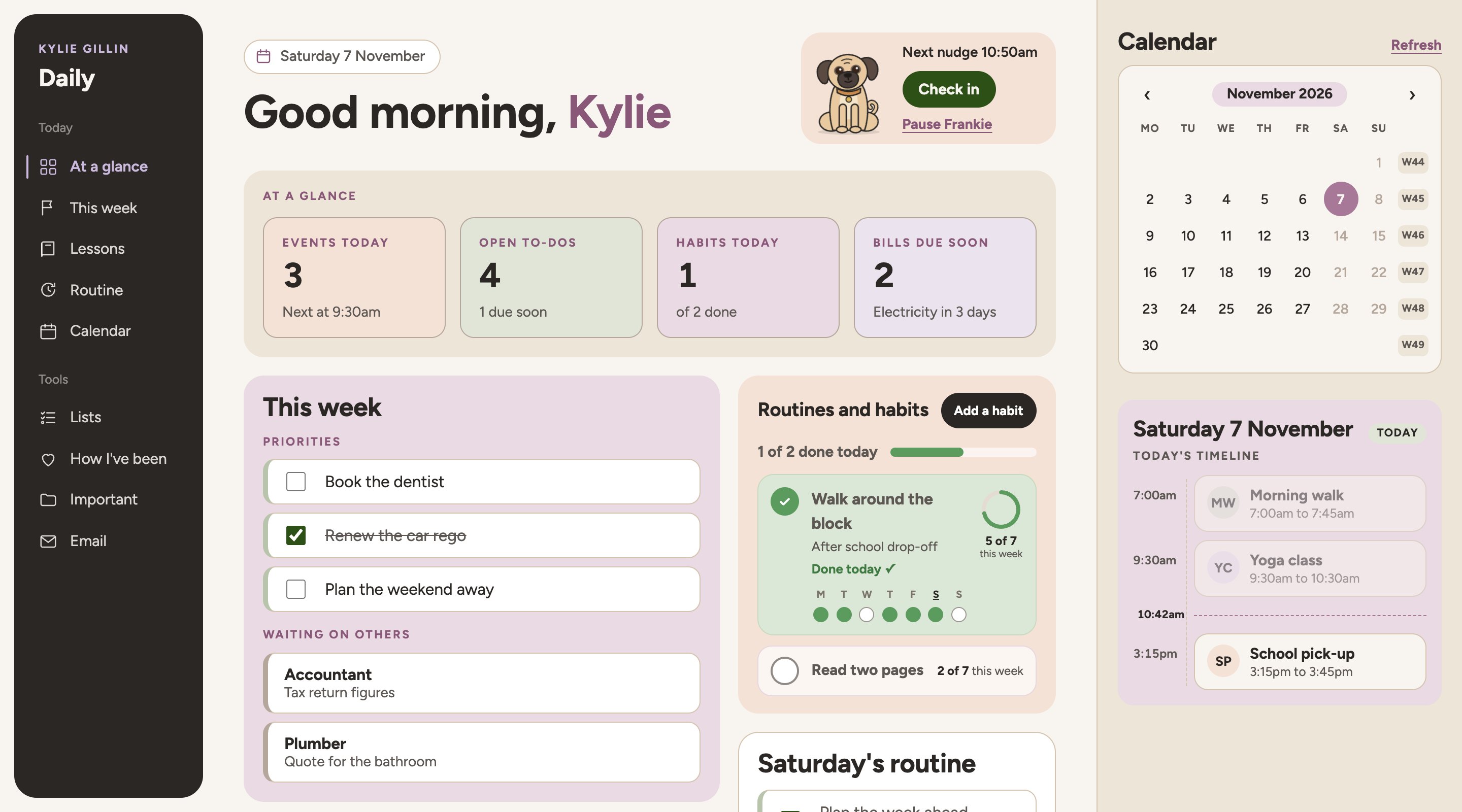
"Having everything that can easily slip the mind in one place is wonderful… I love that you can adjust, remove or even add your own sections to make it unique to your life."On the Frankie dashboard pilot
Register your interest
Be first to hear when Frankie is ready.
Food and mood: everyday recipes with your energy and mood in mind

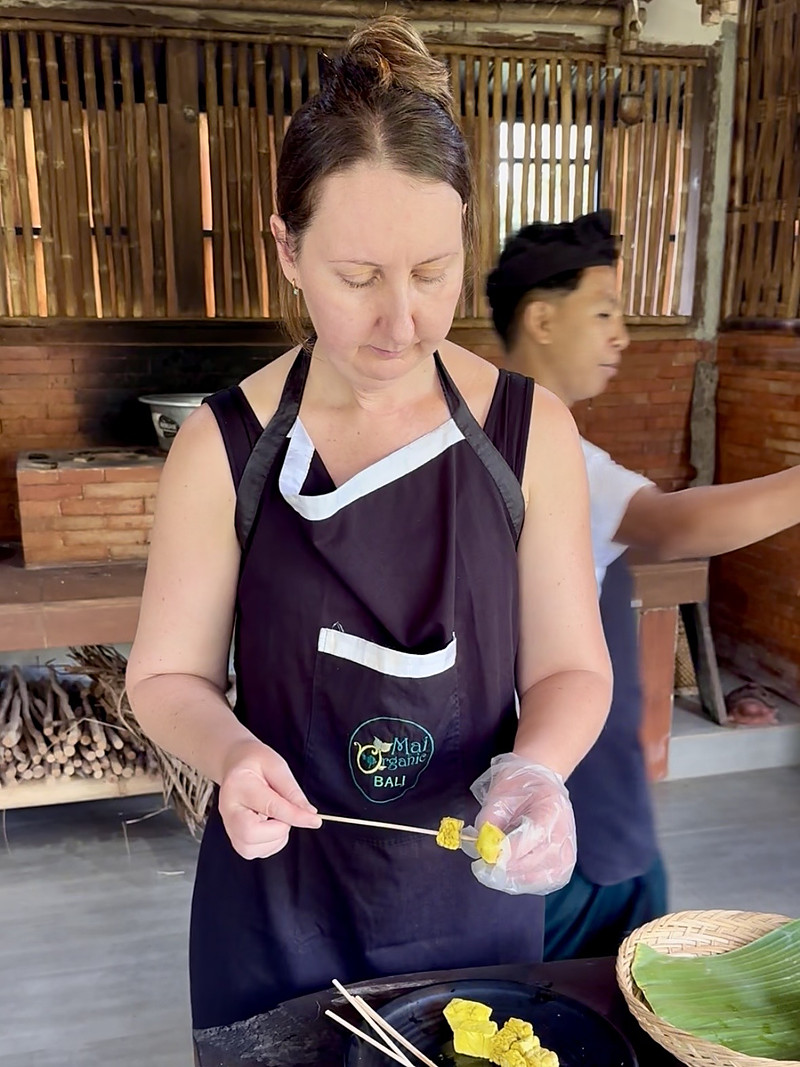
Your gut and your brain are in constant communication. The recipes follow a Mediterranean style of eating, the pattern researchers have studied most for mood, with the Asian flavours I love woven through.
See the recipe book →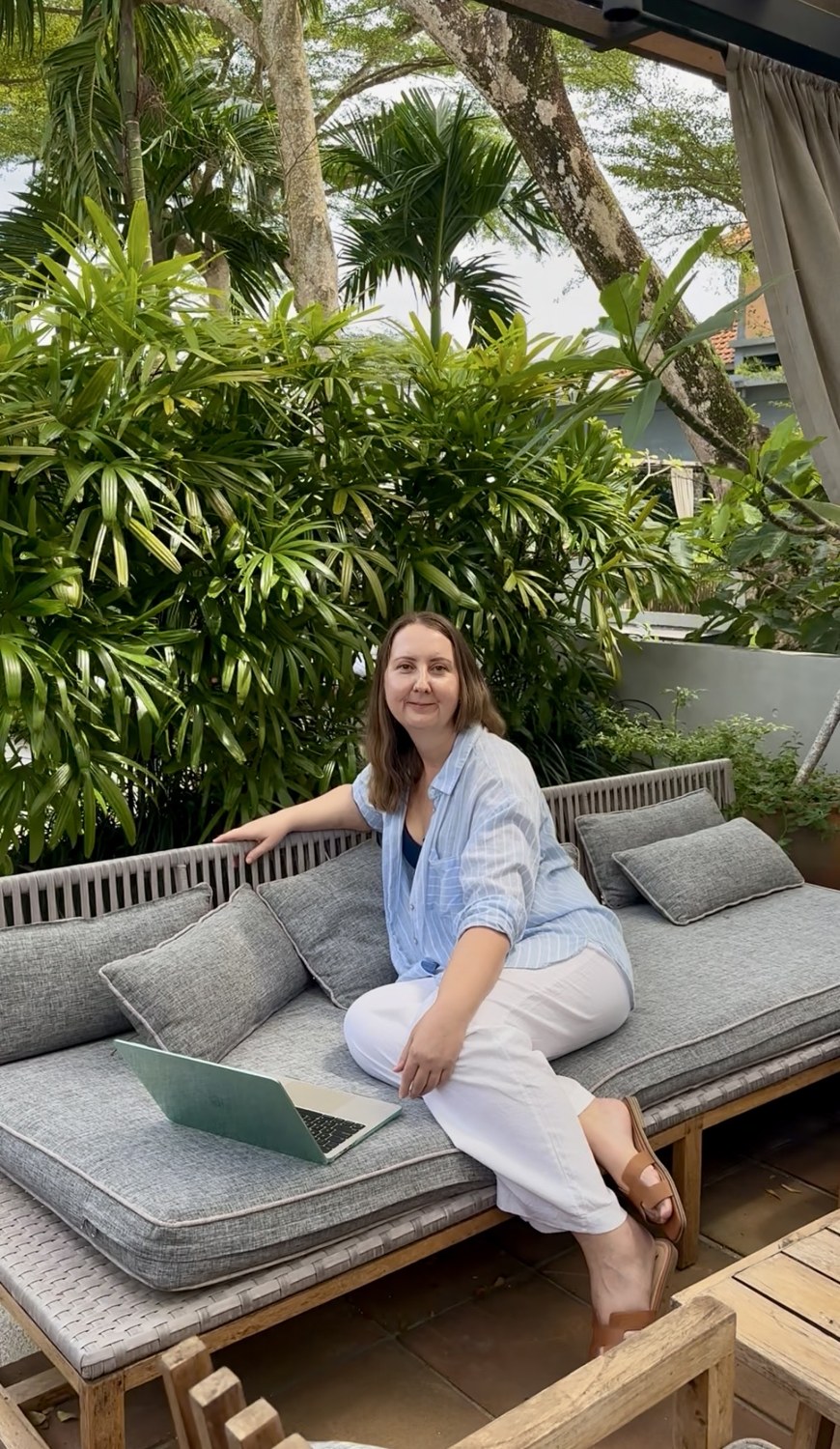
Hi, I'm Kylie Gillin.
For most of my adult life I didn't feel good enough, so I became the strong and capable one who worked harder to prove otherwise. I spent more than 20 years in project and contract management across construction, government and utilities, studying nutrition alongside it and running a wellbeing studio on the side. I was doing everything right and still falling apart.
Eventually my body made me stop. Boundaries and letting go of perfectionism are still daily work for me, and that's what makes this work personal.
I'm no-nonsense about health and wellness. What I share is the unexciting stuff that actually works, checked against the research and small enough to fit a full life.
From the journal: energy, sleep, food and switching off
All posts →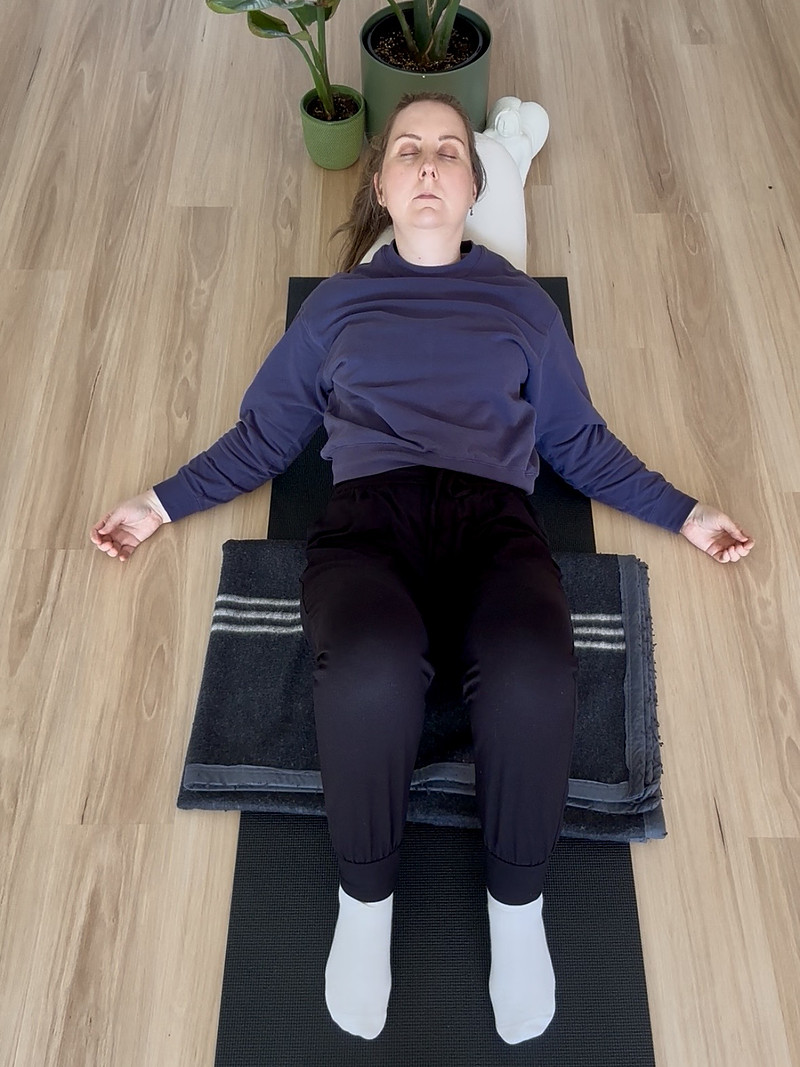
Why am I still tired after resting all weekend?
How do I switch off from work?
Does stress cause bloating?
What is your body budget?
Why is eating healthy so complicated?
Why co-regulation comes before self-regulation
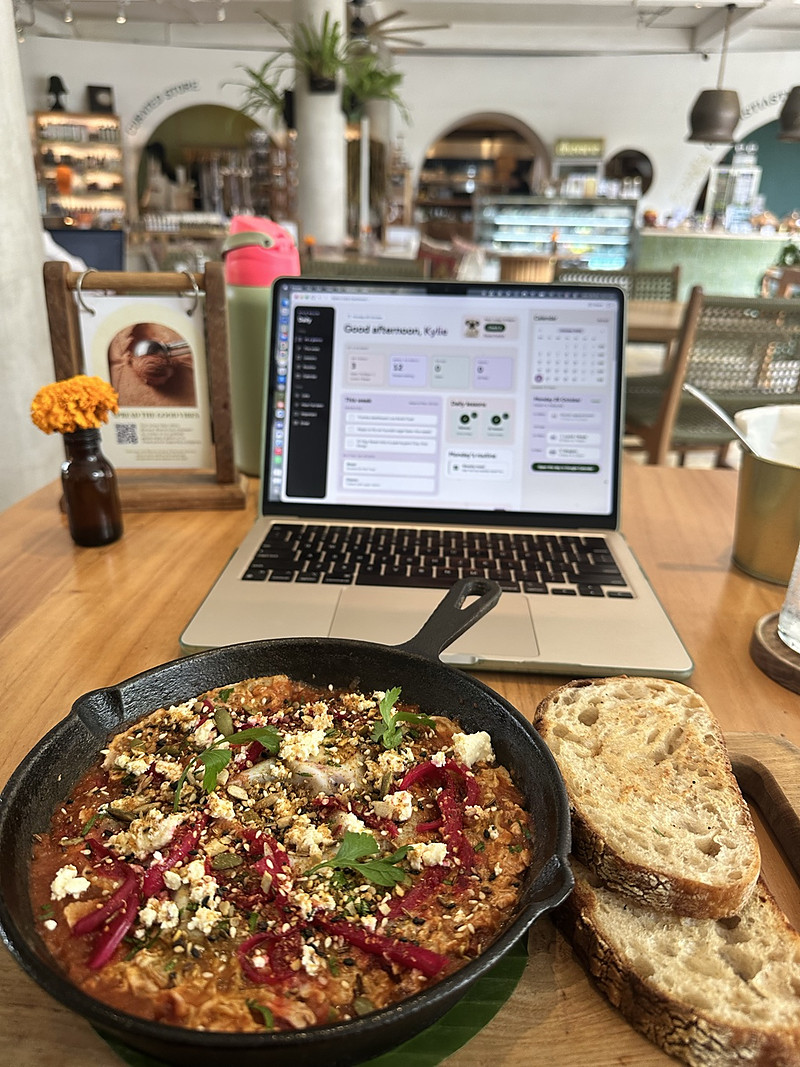
How I use AI in everyday life to start the day
Small Shifts, Big Impact
One small change every fortnight, something you can feel that week. Three evidence-based habits, and you pick one.
Unsubscribe anytime. Privacy policy
Common questions about Even Flow
Why am I tired but wired?
Tired but wired is feeling exhausted and unable to switch off at the same time. You're too tired to do much, yet your mind won't settle when you lie down. It can happen when the day never really ends, and your body hasn't had the signal that it's done.
What can help if I can't switch off from work?
Small, regular signals that the workday is over may help, such as a short walk, a clear end-of-day routine, or slow, floor-based yoga in the evening. The yin course is made for the evenings you're wired and can't switch off.
Is Even Flow a diet?
No. The focus is on adding foods that may support your energy and mood, not on cutting things out. There's no calorie counting and no list of foods to avoid. The recipes are everyday meals, each with a short note on how food and mood connect.
How much time does Small Shifts: Three Weeks take?
As much as you have. It's self-paced, you pick one small shift at a time, and the recipes are pick-and-mix, one or two meals a week. The practices are short enough for your desk, the car or the kitchen.
Are the recipes in the book the same as in the program?
Yes. The Food and Mood recipe book has the same recipes as Small Shifts: Three Weeks. If you have the program, you already have them.
Do I need to use AI?
No. The recipes, the program and the yin course don't use it at all. AI only comes into Frankie, and only if you want it.
Who is Even Flow for?
Women who are tired all the time and still getting everything done, looking for something small that fits a full life. Even Flow uses lifestyle medicine: small shifts in how you eat, move, sleep and switch off.