Home / Journal / Still tired after resting all weekend
Why am I still tired after resting all weekend?
Feeling tired after resting all weekend is common. Rest and recovery aren't the same thing, and a weekend on the couch may not be what restores you.
Kylie Gillin, Bachelor of Health Science in Food and Nutrition · 20 November 2026 · 5 min read
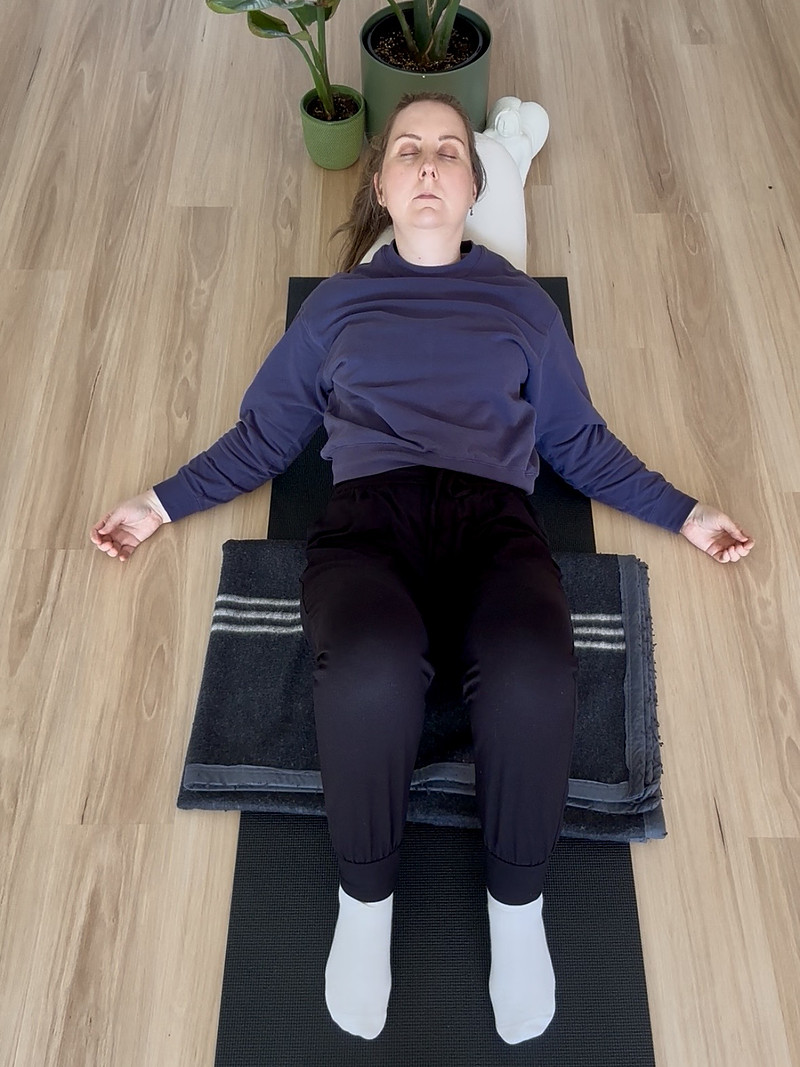
If you're still tired after resting all weekend, it may be because resting and recovering aren't the same thing. Recovery is your body and mind coming back down after a demand has passed, and it seems to depend more on switching off mentally than on the hours you spend lying down. You can spend all Saturday on the couch and still start Monday tired if your mind never really left work.
This post draws on research into work stress and recovery, checked against the original studies on 20 November 2026. The sources are at the end.
Friday night you're on the couch by eight, too tired to choose something to watch. Saturday goes to sleep. Sunday goes to the washing, the food shop and a low hum of dread about the week ahead. You might cancel plans so you can rest, then spend the afternoon answering messages you told yourself you'd leave. By Monday morning you feel the way you did on Friday.
From the outside you're coping. You get through the meetings, the deadlines and the dinners, and people rely on you. Underneath, the weekend that's meant to top you up barely touches the tiredness.
Why am I still tired after resting all weekend?
Rest usually means your body stops. Recovery needs your mind to stop too. When you keep going over work in your head, your nervous system can stay partly switched on, as though the day hasn't finished.
Worry and going over things have been linked with a raised heart rate and stress hormones that stay up after the stressful moment has passed. Your nervous system is built to rise to meet a demand and then come back down once it's over. You've never had trouble rising. The coming back down is the part that quietly drops out when the day never really ends.
The laptop closes at six, but the email you haven't answered comes with you to dinner, into the shower and into bed. That's why a Saturday on the couch may not feel like rest. You're lying still, and part of you is still at work. Many women only notice it when they finally stop, on a Friday night or the first day of leave, and the tiredness seems to arrive all at once. I've written more about why in What is your body budget?
Why am I always tired, even with enough sleep?
Sleep and recovery overlap, but they aren't the same. You can sleep eight hours and still wake tired if your mind spent the evening, or the whole weekend, on work. Many women describe enough hours in bed and still no sense of having come back down.
Tiredness can have many causes, and this post can't tell you which one is yours. It's about the kind that comes with a day that never really ends. If tiredness or low mood is getting on top of you, Beyond Blue (1300 22 4636) and Lifeline (13 11 14) are there to talk to.
What does "tired and wired" mean?
Tired and wired is being exhausted and unable to switch off at the same time. You're too tired to do anything, yet your mind won't settle when you lie down. Many women describe falling into bed and then lying awake going over a conversation, a deadline or tomorrow's list.
It can feel like a contradiction. If you're this tired, why can't you sleep? Being tired and being switched on can happen together. Your body wants rest, and your nervous system hasn't yet had the signal that it's safe to come back down.
Is thinking about work at home always bad for you?
Not always. Going over work with worry, replaying what went wrong or what might, has been linked with more tiredness and poorer sleep. Thinking a problem through to a plan, and then putting it down, doesn't seem to carry the same cost.
So work crossing your mind in the evening isn't the issue on its own. The tiring part seems to be when it circles without landing anywhere.
What actually helps you recover?
Switching off from work mentally seems to matter most. In research on holidays, mentally stepping away from work and moving your body were linked with the biggest lift in wellbeing.
Switching off also seems to be something you can practise, rather than something you either can or can't do. A review of studies that set out to help people detach from work found small to moderate improvements. That's a quietly hopeful finding for anyone who has always thought of themselves as someone who can't switch off.
Can recovery fit into an ordinary week?
It may. Recovery doesn't have to wait for a weekend or a holiday. Short breaks of ten minutes or less have been linked with feeling a little less tired and a little more energetic, although the effect is small.
A few small moments spread across a week are often easier to fit into a full life than waiting for time off. My program Small Shifts: Three Weeks is built around small moments like these.
Tiredness that a weekend doesn't touch usually says more about the shape of the week than the length of the rest. When your nervous system gets a clear signal that the day is done, coming back down can start to happen again, a little at a time. It doesn't need a retreat or a free weekend to begin.
Every fortnight I write Small Shifts, Big Impact, an email with three small, evidence-based habits that fit around a full week, and you pick one to try. The next one might be the place to begin.
Free, every second Friday. Unsubscribe anytime. Privacy policy
Questions women ask
Is it normal to still be tired after a weekend off?
Many women describe it. Saturday goes to sleep and Sunday goes to catching up, so the weekend fills up with recovery and chores. If your mind stays on work through all of it, the time off may not feel restoring, even when you've done very little.
Does a holiday help?
It can. A recent review of holiday research found that time off was linked with a clear lift in wellbeing that lasted longer than earlier research suggested. Switching off from work mentally and being physically active were linked with the biggest benefit.
Why do I feel worse on Sunday night?
Thinking ahead to a demanding week is the same kind of going-over as replaying a hard day. Worry about what's coming has been linked with the same lingering stress response, so your nervous system can start the working week before Monday does.

Kylie Gillin
Nutritionist, lifestyle medicine coach and mind-body facilitator
Bachelor of Health Science in Food and Nutrition, and more than 500 hours of training across yoga, polyvagal theory, the nervous system, embodiment and trauma-sensitive practice. More about me
Last reviewed 20 November 2026
Sources
- Brosschot JF, Gerin W, Thayer JF. The perseverative cognition hypothesis: a review of worry, prolonged stress-related physiological activation, and health. J Psychosom Res. 2006;60(2):113-124. doi
- Querstret D, Cropley M. Exploring the relationship between work-related rumination, sleep quality, and work-related fatigue. J Occup Health Psychol. 2012;17(3):341-353. doi
- Grant RS, Buchanan BE, Shockley KM. I need a vacation: a meta-analysis of vacation and employee well-being. J Appl Psychol. 2025;110(7):887-905. doi
- Karabinski T, Haun VC, Nübold A, Wendsche J, Wegge J. Interventions for improving psychological detachment from work: a meta-analysis. J Occup Health Psychol. 2021;26(3):224-242. doi
- Albulescu P, Macsinga I, Rusu A, et al. "Give me a break!" A systematic review and meta-analysis on the efficacy of micro-breaks for increasing well-being and performance. PLoS One. 2022;17(8):e0272460. doi
Small Shifts, Big Impact
Free, every second Friday. Unsubscribe anytime. Privacy policy
 Nervous system
 Food and nutrition
 Food and nutrition