Home / Journal / How I use AI in everyday life
How I use AI in everyday life to start the day
How to use AI in everyday life beyond searching for answers. How I built a morning dashboard around the way I think, with my friend's pug Frankie on it.
Kylie Gillin, Bachelor of Health Science in Food and Nutrition · 20 November 2026 · 5 min read
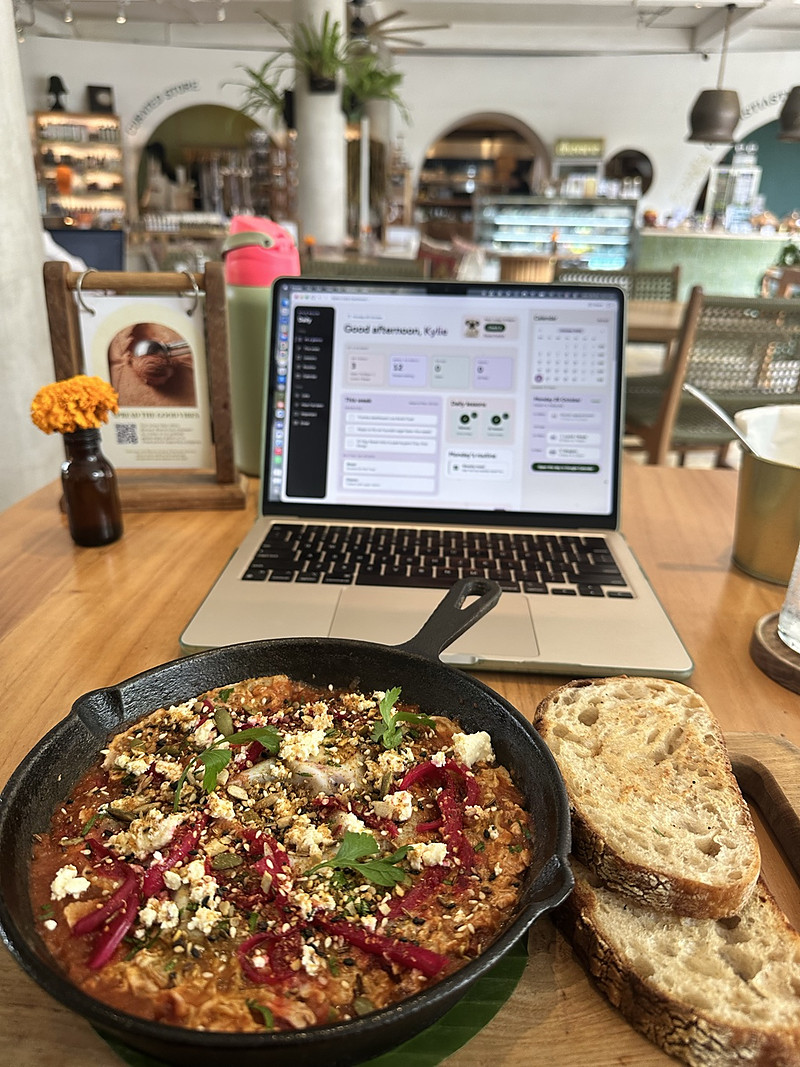
If you're wondering how to use AI in everyday life, it can do far more than answer questions. I used it to build a morning dashboard around the way I think, so the start of my day feels less scattered. It has my calendar, the few things that matter today, a quick check-in, and a photo of Frankie, my friend's pug.
This post is mostly my own experience, with one piece of research on putting feelings into words. The sources are at the end.
Mornings have always been hard for me. I wake up and the whole day arrives at once. There's the meeting at ten, the email I forgot to answer, what's for dinner and the thing I promised someone last week. Before I've had a coffee, I can feel scattered and already behind.
For a long time I thought I just needed to be more organised. I tried planners, apps and lists. Most of them asked me to work the way they worked, and none of them stuck.
Why are mornings so hard to get going?
For me, it's the number of things competing for attention before the day has properly started. Modern life asks a lot of us early. Work messages arrive overnight, family logistics need sorting, and your phone is full of other people's priorities before you've set any of your own.
I've always felt overwhelmed in the mornings. The hard part for me is the sorting, deciding where to start, and the feeling that everything is equally urgent. By the time I'd worked out what mattered, I'd already used up a good part of my energy.
How else can AI help in everyday life?
Yes. Most of us use AI like a search engine. You type in a question and get an answer back. That's useful, but it barely scratches what it can help with.
AI can also help you build things around the way you work. You can talk it through your own habits, what trips you up and what helps, and it can help you shape a tool that fits you, rather than you bending to fit the tool. That's the part I find most useful in everyday life.
How did I build something around the way I think?
I sat down with an AI assistant and talked through my hurdles honestly. We covered the mornings, the scattered feeling, the way I lose track when too much is in front of me, and what actually helps me get going.
From that conversation, we built what I now call Frankie, my morning dashboard. It's one page I open each morning. It shows me my day and the few things that matter, and it's built around how I think.
The difference for me has been that I start the day knowing where to begin. I still have scattered mornings, but now I have one place to start.
Why is Frankie on it?
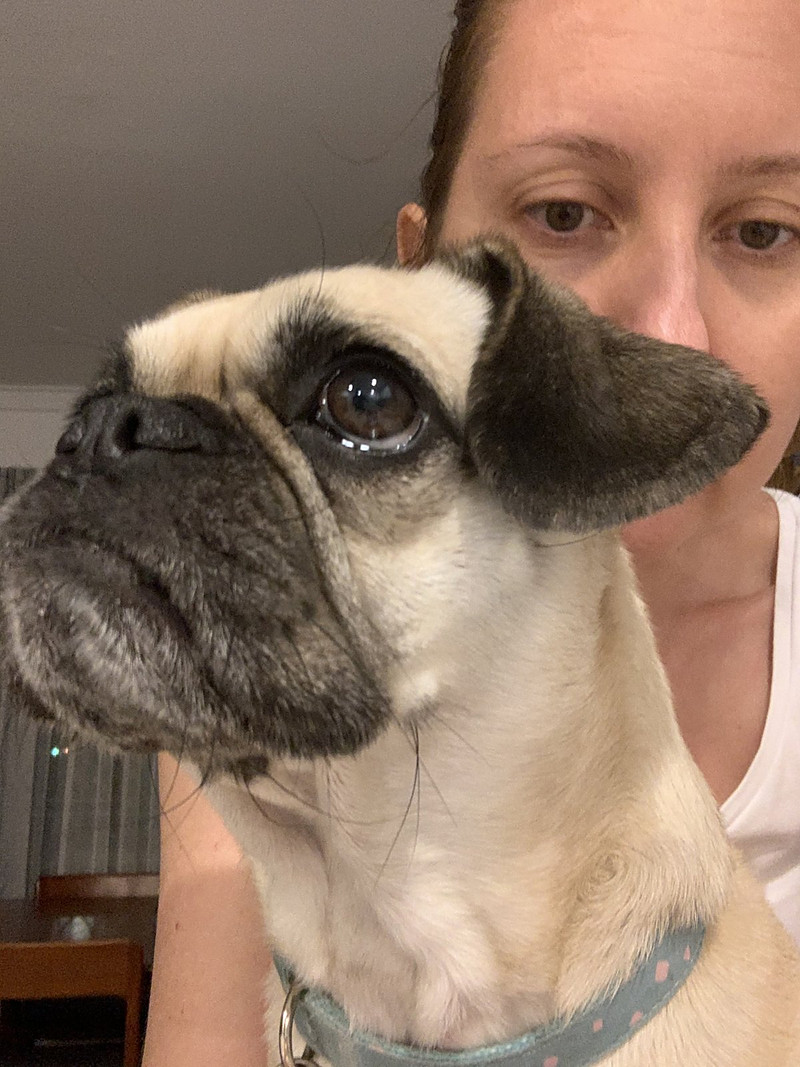
Frankie is my friend's pug, and I love her dearly. Her face is the first thing I see on the page. That was the nice touch at the end, and it's become the part of the page I look forward to.
I've written about co-regulation, the way we settle with the help of others, including the animals we love. In Why co-regulation comes before self-regulation, I wrote about pets being one of the most reachable ways back to steady. Seeing Frankie first thing is a small moment of that for me, before the day starts asking things of me. I don't know of research on photos of pets, so this is simply what I notice.
Why did I add the check-ins?
Because of what I know about stress, the nervous system and burnout from my training and my work, I wanted the start of my day to include a moment to notice how I'm actually going. So I added a short check-in.
It's a small thing, and it's mine. Some mornings I notice I'm more tired than I thought, and I plan the day a little more gently. There's some research behind naming how you feel too. In one small brain-imaging study, putting feelings into words dampened the brain's response to upsetting images. It's one study, but it fits what I see in my work.
Can tools like this make modern life a little lighter?
I think they can, when they're built around you. The world asks a lot of us, and a tool that knows how you work can take some of the sorting off your plate first thing. It's why I'm now making Frankie available to others, for individuals and for workplaces that want something like it for their people. It's coming soon.
It has limits, and they're worth being clear about. It supports my day. It doesn't replace people, rest or professional care. What you put into an AI tool goes to the company that runs it, so I keep what I share sensible. And it took some trial and error to get it working the way I wanted.
For me, AI has been a quiet help, a way to build something that meets me where I am on a hard morning. If mornings are hard for you too, it might help to know that the tools can be shaped to fit you, and that it can start with honestly naming what gets in your way.
Every fortnight I write Small Shifts, Big Impact, an email with three small, evidence-based habits that fit around a full week. You pick one to try.
Free, every second Friday. Unsubscribe anytime. Privacy policy
Questions women ask
How can I use AI in everyday life?
Beyond answering questions, AI can help you plan your day, sort your priorities and build simple tools around the way you work. Start by telling it honestly what you find hard.
Is it safe to share personal things with AI?
Be thoughtful about it. What you type goes to the company that runs the tool, so check its privacy settings and keep sensitive details out.
What is Frankie?
Frankie is a morning dashboard I built around the way I think, named after my friend's pug. It's coming soon for individuals and workplaces.
Kylie Gillin
Nutritionist, lifestyle medicine coach and mind-body facilitator
Bachelor of Health Science in Food and Nutrition, and more than 500 hours of training across yoga, polyvagal theory, the nervous system, embodiment and trauma-sensitive practice. More about me
Last reviewed 20 November 2026
Sources
- Lieberman MD, Eisenberger NI, Crockett MJ, et al. Putting feelings into words: affect labeling disrupts amygdala activity in response to affective stimuli. Psychol Sci. 2007;18(5):421-428. doi:10.1111/j.1467-9280.2007.01916.x
Small Shifts, Big Impact
Free, every second Friday. Unsubscribe anytime. Privacy policy
 Things I've noticed
 Nervous system
 Nervous system